

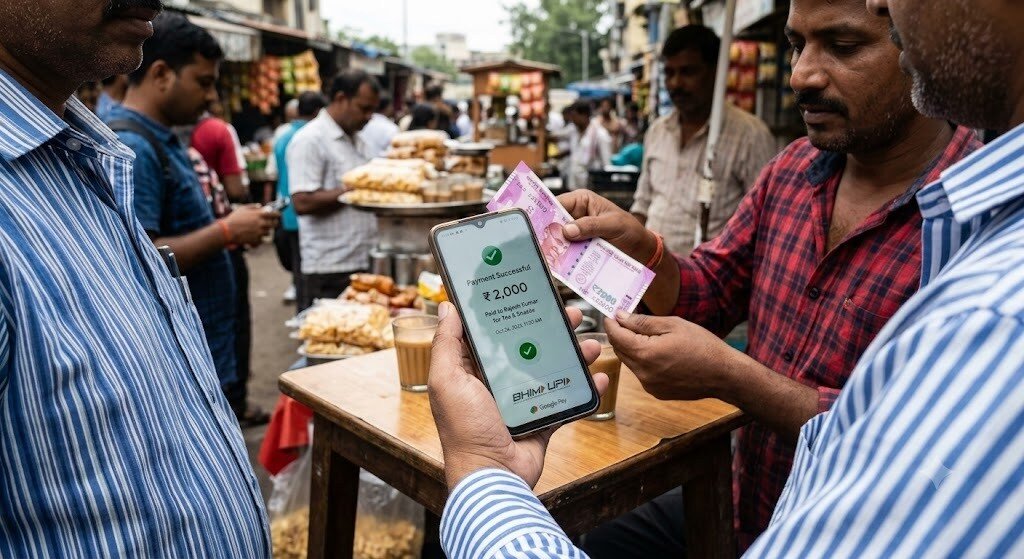
From October 15, UPI merchant payments above ₹2000 will attract a 0.4% Merchant Discount Rate capped at ₹300 per transaction. The new rule applies only to person to merchant payments. Person to person transfers and merchant payments up to ₹2000 remain free. This exemption covers nearly 95% to 96% of all transactions. Micro merchants with monthly UPI receipts below ₹1 lakh also remain exempt.
The Reserve Bank of India clarified that MDR will not be passed on to consumers. Banks must ensure merchants do not charge customers extra. For essential sectors such as fuel, telecom, railways and insurance, a flat ₹5 MDR will apply.
The change aims to create a revenue stream to support UPI infrastructure, cybersecurity, innovation and customer service. UPI has grown rapidly, processing 2451 crore transactions worth ₹29.9 lakh crore in August 2026. Sustaining this scale requires funding.
For merchants, the MDR burden is capped to prevent excessive costs. For example, a ₹3000 purchase will attract ₹12 MDR, a ₹50000 purchase will attract ₹200 MDR, and a ₹100000 purchase will be capped at ₹300 MDR.
Analysts estimate the new framework could generate ₹22000 crore annually by FY28 if MDR applies to half of transaction value. Consumers remain unaffected while larger merchants contribute to UPI sustainability.
